

Let’s be honest. Most guides about buying an apartment read like a bank brochure. Dry, vague, and somehow completely useless the moment you’re actually standing in front of a notaire wondering what you just signed. So here’s the version I wish someone had handed me – the real process, with the bits people skip over.
If you want to go deeper on the French buying process specifically, the site acheter-un-appartement.fr covers it in serious detail and is worth bookmarking before you start anything.
Step 1: Getting your finances straight before you even look at listings
 This is where most first-timers waste months. They fall in love with an apartment, make an offer, then go talk to their bank – and discover they can’t actually afford it, or the timeline is completely off.
Do this first :
Before you visit a single property, sit down with a mortgage broker (courtier en crédit immobilier). Not your bank. A broker. They compare dozens of lenders simultaneously and frankly, they often get you better rates than going directly. In 2025, with rates still hovering between 3.5% and 4.2% depending on your profile, even a 0.3% difference on a 200,000 € loan is roughly 6,000 € over the life of the mortgage. That’s not nothing.
Get a simulation de financement – not a full pre-approval, just a serious estimate based on your income, existing debts, and deposit. This tells you your real budget, not your optimistic one.
Step 2: The search phase – and why you need to think like an investor even if you’re not one
You’re not just buying somewhere to live. You’re buying an asset. Maybe you’ll sell in seven years. Maybe life changes and you need to rent it out. Always ask : is this apartment easy to resell ?
Things that tank resale value that people ignore :
– Ground floor in a city centre (it matters more than you think)
– No outdoor space in a post-Covid market
– Excessive service charges in the copropriété – anything above 50–60 € per m² per year is worth questioning
– A building with ongoing legal disputes (check the procès-verbaux des assemblées générales – you’re legally entitled to the last three years)
And those PV documents ? Most buyers never read them. Big mistake. That’s where you find out the roof needs replacing in two years and there’s a 15,000 € special levy coming for every owner.
Step 3: Making an offer – less dramatic than you think, but timing matters
When you find the right place, you make an offre d’achat. It’s usually written, it specifies the price and sometimes a few conditions, and if the seller accepts it… you’re not legally bound yet. Surprising, right ? The commitment comes later, at the compromis de vente.
That said – don’t lowball aggressively in 2025 unless the property has been sitting for three months or more. The Paris market is still tight in most arrondissements. In secondary cities like Lyon or Bordeaux, there’s slightly more room to negotiate, maybe 3–5%. In rural areas, you have more leverage, but you also have less competition for a reason.
Step 4: The compromis de vente – where things get real
 This is the preliminary sales contract. You pay a deposit here, usually 10% of the purchase price. Once signed, you have a 10-day cooling-off period (délai de rétractation) during which you can walk away with no penalty. After that, backing out costs you the deposit – or worse, exposes you to legal action from the seller.
The compromis also includes conditions suspensives – essentially get-out clauses. The most important one : the mortgage clause. If your loan is refused, you get your deposit back. Don’t let anyone pressure you into signing without it.
Step 5: The mortgage approval – allow more time than you think
From compromis to final sale, you typically have 45 to 60 days. That sounds like a lot. It isn’t.
Your bank or broker needs : three months of payslips, two years of tax returns, three months of bank statements, proof of deposit funds. If you’re self-employed, add proof of your company’s last two balance sheets. The file takes time to assemble, and banks take time to review it – sometimes up to three weeks just to get a formal offer.
Once you have the written mortgage offer, French law requires a mandatory 10-day reflection period before you can accept it. You cannot sign faster than that, legally. So plan accordingly.
Step 6: The final sale at the notaire
The acte authentique de vente – the final deed – is signed at the notaire’s office, usually 2 to 3 months after the compromis. Both parties sign, you pay the balance, and you get the keys.
What a lot of buyers don’t realise : notaire fees are not just fees. They include significant taxes paid to the French state – mainly the droits de mutation. On an older property, expect to add roughly 7 to 8% of the purchase price on top. On a new build, it’s closer to 2.5 to 3%. This is not negotiable, and it’s not the notaire pocketing it.
The stuff nobody tells you about the actual day
You’ll sign maybe 80 pages of documents. The notaire will read key sections aloud – it’s legally required. It takes about two hours. Bring ID, your RIB (bank account details), and frankly, bring a coffee too.
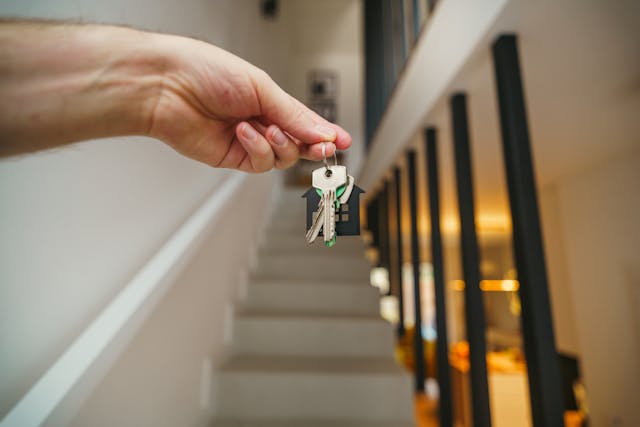
After the signing, there’s sometimes a delay before the keys are physically handed over if the seller hasn’t fully vacated. Get the handover date in writing before the final signing day. Sounds obvious. People forget.
One last thing
 The whole process, start to finish, realistically takes 4 to 6 months if everything goes smoothly. Add another month or two if there’s any complication with the mortgage or the building’s legal situation.
Is it stressful ? Honestly, yes, a bit. But it’s manageable if you know what’s coming. The people who struggle are the ones who show up at each stage unprepared, not the ones who found the process genuinely complicated. Know the steps, build the timeline backwards from when you want to move in, and don’t skip the due diligence on the building.
That’s the version nobody puts in the brochure.